

A Fine Line between Genres: Is It Young Adult or Coming of Age Literary Fiction?
If you are a fiction writer and you’re currently writing a novel, there is an unavoidable phase in the creative process where you will consider the genre and its elements and perhaps the commercial side of your craft.
As you begin the writing process or prepare your work for publication, you’ll start to wonder where on the bookshelves of bookstores does my book belong? If you are writing a young adult (YA) novel and/or coming of age literary narrative, this is a question worth exploring.
Writing a novel that includes features of coming of age literature and/or young adult (YA) fiction will make you wonder where in the publishing ecosystem your novel belongs. So I wanted to provide fellow writers and my readers with information on this topic and learn about ‘both’ genres as I did prior, during, and after writing my first novel “The Dust That Remains.”
Through the years I’ve learned about and taught English literature, I recalled seeing similar elements in coming of age and YA novels. So I’ve dug a bit deeper and searched for information about genre features or elements and conventions to gain a clear idea where my novel, “The Dust That Remains,” fits in in the literary landscape and/or the publishing ecosystem.
When I began perusing through each genre, I discovered more similarities than differences. I’ll start by describing the following two areas:
- Genre conventions for YA.
- Features of coming of age literature.
YOUNG ADULT (YA) GENRE CONVENTIONS
John Green, for example, says that “…good books for teenagers depend upon a vast and fragile interconnected network that collectively functions on what I am going to call the YA genre” (Does YA Mean Anything Anymore?: Genre in a Digitized World, 15).
Moreover, David Brown in How Young Adult Fiction Came of Age, says that there are features that are more specific to YA, including teens’ emotions while facing life or death, issues of separation and attachment, individuation, and romantic, sexual and economic independence (Brown).
Considering equally relevant features, such as the ones listed by Emma Newman in Five Rules of Young Adult Fiction, she writes:
- Cohesive flow of plot and character.
- Credible protagonists who push boundaries (i.e., age, gender).
- Characters experiencing pain to carve out truth about their own experiences.
- Narratives that present problems that both young and adults can relate to.
- Use of language that conveys simple prose and sentence structure (Newman).
The next step in my query was to do a search for YA novels and see the type of results that would rank at the top of the SERP (Search Engine Result Page), including titles I’ve read and taught throughout the years since I’ve been a high school English teacher and English composition instructor.
I wanted to see if my brief and simple search would meet the conventions above. So here are my findings:
Speak by Laurie Halse Anderson
To Kill a Mockingbird by Harper Lee
Lord of the Flies by Wiliam Goldin
The House of Mango Street by Sandra Cisneros
The Absolutely True Diary of a Part-Time Indian by Sherman Alexi
Turtles All The Way Down by John Green
Interestingly, when I looked at the YA genre conventions above, many of these titles, in one way or another, met the given criteria.
HOW ABOUT FEATURE OR CONVENTIONS OF COMING OF AGE LITERATURE?
For some reason, the label ‘coming of age’ seems to tilt more toward the artistic side of a narrative, rather than to the commercial side as YA does. This may be just a matter of perception, my perception perhaps.
Namely, Melanie D. Koss and William H. Teale say that “YA books have been identified as ‘problem novels’–novels with social issues that affect teens–and coming-of-age novels–books that deal with a significant event in a teenager’s life that transforms one from childhood/adolescence to adulthood” (What’s Happening in YA Literature? Trends in Books for Adolescents, 567).
Likewise, Morgan Hezelwood defines the coming of age genre protagonists as “a character on the cusp of becoming.” Hazelwood provides a list of character markers by which to identify this genre:
- A character has to grow, to change, and to find a life that suits her new self.
- A character can be a graduating high schooler, a dragon slaying apprentice.
- A teacher retiring, a story focusing on the next state of one’s life (Hazelwood). (A teacher retiring? That’s interesting. Older folks do enjoy reading YA novels).
In like manner, San Diego State University Professor Lashon Daley defines the coming of age genre as follows:

“The coming-of-age genre within contemporary literature and film habitually features an adolescent youth undergoing emotional and physical processes in search of identity and meaning as they move toward adulthood.
Their emotional transformation highlights their internal moral struggle—they versus themself—often becoming both the narrative’s protagonist and antagonist” (Daley, 1036, Coming of (R)age: A New Genre for Contemporary Narratives about Black Girlhood).
This implies that not all adolescents experience rites of passage in the same fashion (Daley, 1036). This is particularly true in the sense that each writer constructs plot, settings, and especially distinguishable characters.
In the case of “The Dust That Remains,” my novel takes place in a rural, universal setting, with unconventional characters who may have quite different experiences than the high schooler or the retiring adult that’s moving onto a new phase in life.
Characters in my novel carve a new version of themselves, especially after dealing with and confronting significant life events.
In the case of “The Dust That Remains,” my novel takes place in a rural, universal setting, with unconventional characters who may have quite different experiences than the high schooler or the retiring adult that’s moving onto a new phase in life.
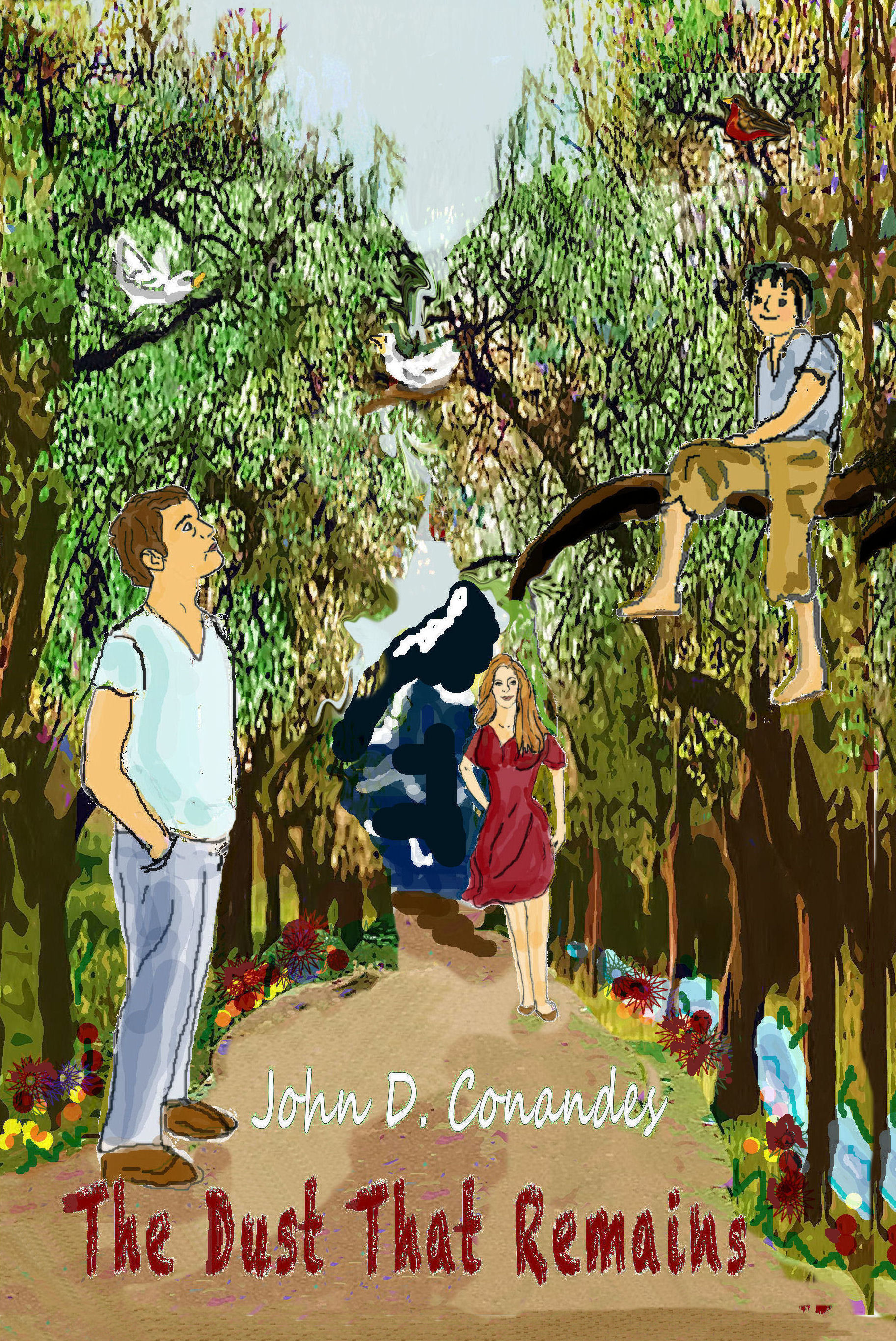
Characters in my novel carve a new version of themselves, especially after dealing with and confronting significant life events.
In many respects the characters in “The Dust That Remains” meet the criteria under each genre convention and perhaps offer a bit more:
YA CRITERIA
Character(s):
- deal with emotions when facing life or death
- have issues of separation and attachment
- question and assert individuation
- strive for romantic, sexual, and economic independence (Brown)
- are credible protagonists who push boundaries
- experience pain and carve out truth about their own experiences
- represent problems that both young adults can relate to (Newman)
COMING OF AGE CRITERIA
Character(s):
- find a new life that suits a new self. (Hazelwood)
- are adolescents going through emotional and physical processes
- search for an identity and meaning as they move toward adulthood
- experience a transformation that highlights their internal moral struggle
- become both the protagonist and antagonist (Deley, 1036)
SO IS YOURS A COMING OF AGE OR YOUNG ADULT NOVEL? WHAT ARE THE IMPLICATIONS?
From a marketing standpoint, finding a genre that suits your work has much to do with finding an audience and knowing under which label or category you can place your work. As far as “The Dust That Remain,” it will most likely be under the YA genre, as it could also be listed under literary fiction.
So could it be that labeling your novel YA or coming of age literary fiction becomes a question of target marketing and promotion rather than one of literary import? Prestige, perhaps? Maybe. The answer lies in how an author may choose to market his or her work and how an audience may receive it.
The marketing side when promoting a novel will definitely be a topic I will cover in future blog posts and conversations.
So, considering these similarities and differences and viewing works through a literary lens, and your lens as a writer and/or reader, is there any major distinction that makes YA and coming of age novels different from one another? What do you think?
After learning about genres and their conventions, the most important aspect to consider at the outset when writing a novel is to be comfortable with your writing process. Write as you see fit and try to craft the best story that you can possibly tell without worrying too much about genre conventions at the outset.
In the end, your work may include more than a few features of various genres and their conventions all at once and that is perfectly fine‒this is an aspect of fiction that will definitely make your work stand out. In The Art of Fiction, John Gardner offers this advice: “Genre-crossing of one sort or another is behind most great literary art in the English tradition” (20). So press on the pedal and write!
So, what do you think? Do you see any other difference(s) between these two genres? Are you writing a novel across genres? Leave a comment about your experience with YA or coming of age / literary fiction in the comment section below.
If you’d like to receive updates and posts on this and other related topics, sign up for my free monthly newsletter.
Now What?!
Latest Posts

About the Author: John D. Conandes is professor of writing and rhetoric at Florida International University. He is the author of “The Dust That Remains,” a YA adult novel. Follow him on Twitter.
 John D. Conandes